

Generative Engine Optimization: How Brands Win Visibility in AI Search
November 18, 2026
•
8 minutes
Content
Why AI Answers Changed the Rules of Visibility
What Changed in Buyer Behavior
SEO vs GEO: Same Foundation, Different Finish
A Practical GEO Workflow for Marketing Teams
What to Publish First
How We Review a Page for GEO
Example: Turning a Thin Service Page into a Citable Page
How Often Should You Refresh Content?
Measurement Beyond Rankings
Common Mistakes We See
A Simple 30-Day Plan
What VUCA Recommends in 2026
Why AI Answers Changed the Rules of Visibility
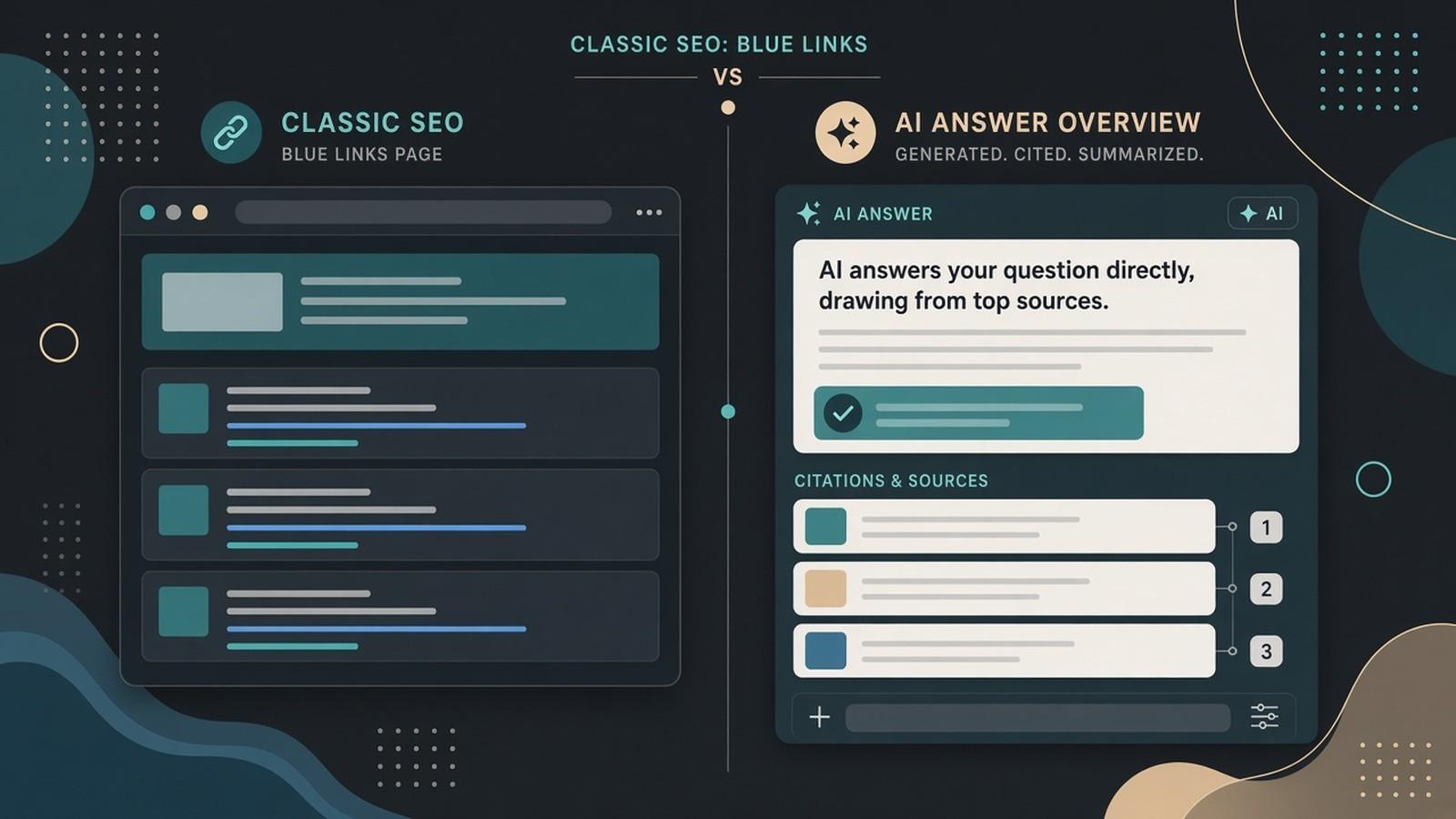
A few years ago, “winning search” mostly meant ranking in the top three blue links and fighting for the click. That game still matters. But it is no longer the whole game.
Google AI Overviews, ChatGPT, Perplexity, Gemini, and other answer engines increasingly summarize a topic before a user opens your site. People still visit websites — especially when they need details, pricing, demos, or proof — but the first impression often happens inside an AI-generated answer.
This is why teams started talking about Generative Engine Optimization (GEO). In practice, GEO means writing and structuring content so AI systems can understand it, trust it, and cite it. You are not only optimizing for a crawler. You are making your expertise easy to reuse.
That does not replace SEO. It exposes weak SEO. Thin pages, vague claims, and keyword stuffing were always bad. In an AI-first SERP, they become invisible faster.
What Changed in Buyer Behavior
Look at a typical B2B journey in 2026. A marketing lead asks ChatGPT how to reduce CPL in Google Ads. A founder asks Perplexity which CRM fits a 20-person sales team. A product manager asks Google for “best landing page structure for paid traffic” and gets an overview with citations.
In each case, the user leaves with a shortlist of ideas and vendors before your sales page even opens. If your brand never appears in those answers, you enter the conversation late — after preferences are already forming.
This is why “traffic” alone is a weak KPI now. You also need presence in the answers that shape demand.
SEO vs GEO: Same Foundation, Different Finish
Classic SEO still covers crawlability, indexation, internal linking, technical health, and ranking for intent. GEO builds on that and adds a second layer: answer readiness.
| Area | Classic SEO focus | GEO focus | What to ship on the page |
|---|---|---|---|
| Goal | Rank and earn the click | Get cited and reused in AI answers | Clear answer near the top, then depth |
| Content style | Comprehensive pages for queries | Evidence-rich, entity-clear explanations | Definitions, numbers, examples, sources |
| Structure | Headings, links, metadata | Extractable sections and comparisons | Short answer blocks, tables, FAQs |
| Trust signals | Backlinks, brand search, UX | Verifiable claims and expertise | Cases, methods, author context, dates |
| Measurement | Rankings, organic sessions, CTR | Mentions in AI answers, assisted demand | Query set + citation checks + CRM notes |
If you only chase rankings, you can still win clicks. If you also win citations, you influence people who never click the first result — and those users often arrive warmer.
A Practical GEO Workflow for Marketing Teams
You do not need a separate “AI SEO department.” Fold GEO into content operations you already run.
1. Build a question map, not just a keyword list
Start from real buyer questions:
- What is this solution, in plain language?
- When should a company choose A vs B?
- What does implementation look like week by week?
- What budget range is realistic?
- What usually breaks, and how do you prevent it?
Keyword tools help, but sales calls, support tickets, and CRM notes are often better. AI engines lean toward content that answers those operational questions directly.
2. Write the answer first, then expand
Open key sections with a direct answer in 2–4 sentences. Then add nuance, examples, and caveats. This helps both scanners and models that extract concise statements.
Weak opening: “In today’s rapidly evolving digital landscape, businesses must consider multiple factors…”
Stronger opening: “If your CPL rose after switching to broad match, check conversion tracking and search term quality before raising budget. Most waste comes from broken measurement, not from the bid strategy itself.”
3. Add proof that can be checked
AI systems prefer content that looks like primary knowledge. Useful proof includes:
- anonymized campaign results with context
- process checklists your team actually uses
- comparison criteria with trade-offs
- original definitions of your method
- updated dates and “what changed” notes
You do not need theatrical thought leadership. You need specific, usable material.
4. Make entities obvious
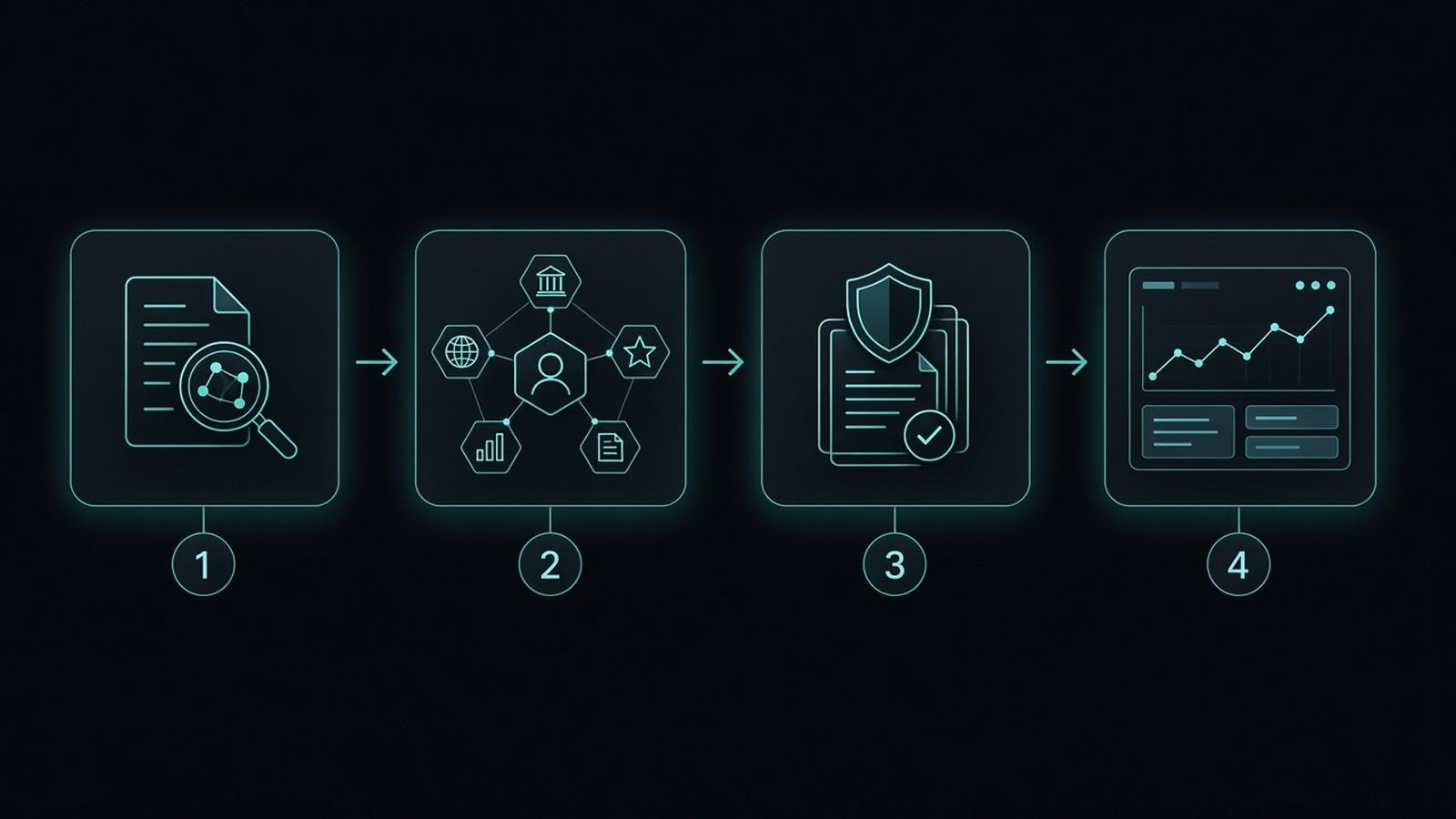
Say who you are, who the page is for, what service or product is discussed, and what outcome it connects to. Ambiguous pages are hard to cite. Clear pages are easy to reference.
Internal links help here. Connect a service page to a case study, a comparison guide, and a technical explainer. That network tells both users and models how your expertise fits together.
What to Publish First
If you have limited capacity, prioritize pages that already carry commercial intent:
- Service and category pages with outcomes, process, and scope boundaries.
- Comparison pages such as “Search Ads vs Performance Max” or “custom website vs template.”
- Implementation playbooks with steps, timelines, and common mistakes.
- Original benchmarks from your client work, even if ranges are anonymized.
- Objection handlers that sales already answers on calls.
Skip another generic “What is SEO?” article unless you can add a viewpoint your team uses with clients. The open web is full of interchangeable definitions. Your edge is judgment from delivery work.
How We Review a Page for GEO
When VUCA audits content for AI visibility, we usually ask five blunt questions:
- Can a smart non-expert understand the main answer in under a minute?
- Are claims backed by method, numbers, or examples?
- Is it clear which company, service, and audience the page belongs to?
- Would a competitor’s page look almost identical if you removed the brand name?
- Has anything material been updated in the last quarter?
If the answer to (4) is yes, the page is probably too generic to earn citations. If (5) is no, the page may quietly lose relevance while competitors refresh theirs.
Example: Turning a Thin Service Page into a Citable Page
Imagine a generic “Google Ads management” page. Version A lists channels, promises growth, and ends with a contact form. Version B does the same job, but answers the questions AI systems and buyers reuse:
- who the service is for (and who it is not for)
- how onboarding works in the first 14 days
- which metrics define success in month one vs month three
- what data access is required before media buying starts
- three failure patterns that inflate CPL
Version B is longer, but not fluffier. It gives extractable statements. When someone asks an AI tool how to choose a Google Ads partner, Version B has sentences worth citing. Version A mostly has adjectives.
This is the editorial standard behind GEO. You are writing for reuse, not only for impression share.
How Often Should You Refresh Content?
A useful rule of thumb:
- Commercial service pages: review every 1–2 months
- Comparison guides: review when platforms or pricing models change
- Playbooks: update after every major delivery lesson
- Benchmarks: refresh at least quarterly, or mark the sample period clearly
You do not need to rewrite everything. Often the highest ROI edit is adding a clearer answer block, one table, and two proof points to a page that already ranks.
Measurement Beyond Rankings
Keep your classic SEO dashboard. Then add a lighter GEO layer.
Track every month:
- a fixed list of 30–50 priority questions
- whether AI answers mention your brand, your competitors, or nobody useful
- which of your URLs get cited when someone is mentioned
- branded search and direct traffic movement after content launches
- sales notes like “found you via ChatGPT / AI overview”
Do not obsess over one lucky citation. Look for patterns. If competitors own the “X vs Y” answers in your category, that is a content brief, not a mystery.
Ranks still matter. Citations are becoming the new above-the-fold.
Common Mistakes We See
- Publishing more pages instead of improving the few pages that already attract intent
- Hiding the answer under 800 words of introduction
- Making absolute claims with no method or sample size
- Leaving service pages as brochure text with no process or proof
- Treating GEO as a prompt-engineering trick instead of an editorial standard
- Forgetting technical basics: slow pages, broken canonicals, and weak internal links still hurt
GEO is not a loophole. It is pressure on content quality.
A Simple 30-Day Plan
If you want a concrete starting plan:
Week 1: Pick 20 priority questions and check how AI tools answer them. Note who gets cited.
Week 2: Choose five URLs with commercial intent. Rewrite openings, add proof, and clarify entities.
Week 3: Publish or upgrade one comparison page and one implementation playbook from real client work.
Week 4: Recheck the same 20 questions, update internal links, and brief sales on the new pages.
This is enough to learn whether GEO is a content problem, a positioning problem, or both — without freezing the roadmap for a quarter.
What VUCA Recommends in 2026
Treat GEO as an extension of strong digital strategy:
- Fix technical SEO and tracking first.
- Clarify positioning so your pages are about something specific.
- Rewrite priority pages with answer-first structure and evidence.
- Build a small set of comparison and playbook articles from real delivery experience.
- Review AI answers for your core questions every month and close gaps.
Brands that win AI search will not be the loudest. They will be the easiest to verify — for people and for machines.
If you want, we can audit your current service pages and show which ones are citation-ready, which ones are invisible to AI answers, and what to rewrite first.
Dima Karchmit
Full stack developer
Recent posts
SEO website promotion in 2026: what really works
In the world of digital marketing, updates happen at an incredible pace, and SEO is no exception. To succeed in 2026, it is necessary to be ready to adapt and experiment.
Dima Karchmit
Full stack developer
March 20, 2026
8 minutes
How to Understand That Your Advertising Budget Is Being Wasted: Signs, Metrics, and Audit in 2026
Main signs of wasted advertising budget in Google Ads, Yandex Direct, Meta Ads, and TikTok Ads. CPL, CPA, ROMI metrics, advertising campaign audits, and ways to reduce lead costs.
Dima Karchmit
Full stack developer
May 8, 2026
7 minutes

